
RESEARCH LIBRARY • PREPARATION REFERENCE
Laboratory Reconstitution Reference
A step-by-step reference for reconstituting and storing lyophilized research peptides.
Lyophilized (freeze-dried) research peptides require reconstitution with bacteriostatic water before use in laboratory settings. This reference covers the materials required, the reconstitution procedure, and proper storage conditions.
What you will need
- Your peptide vial (lyophilized powder — freeze-dried, so it needs liquid added before use)
- Bacteriostatic water (BAC) — sterile water with 0.9% benzyl alcohol, which stops bacteria growing so a vial stays usable for weeks rather than a single sitting
- Sterile syringe
- Alcohol wipes for sterilization
Before you begin
- Work in a clean area and wipe vial tops with alcohol.
- Use a new syringe and needle each time.
Step-by-step reconstitution
- Check your ratioReference the BLP Research Reference guide for the correct BAC-to-peptide ratio for your specific compound.
- Draw the BAC waterDraw the required amount of BAC into the syringe. Flick the syringe and ensure there are no bubbles.
- Add the BAC waterInject the BAC water into the vial.
- Swirl to dissolveGently swirl until fully dissolved. Let it sit if needed.
- Equalize the pressureRemove the needle from the top of the syringe by unscrewing it, then pierce the vial to equalize pressure.
- Store correctlyStore the reconstituted peptide in the refrigerator between 35–40°F (approximately 2–4°C).
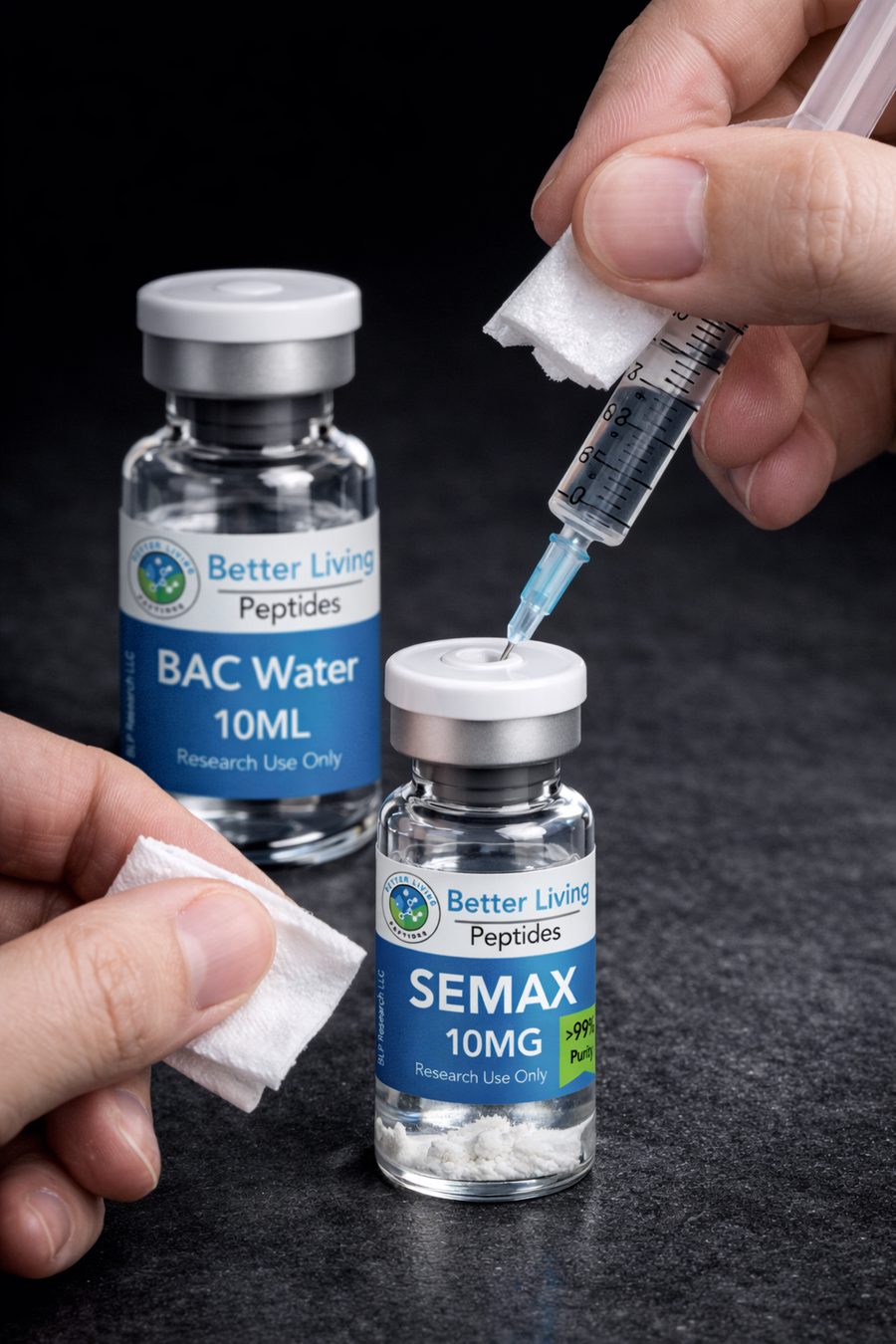
Watch: reconstitution walkthrough
Video: peptide reconstitution walkthrough from the BLP Research team.
Storage reference
| State | Storage |
|---|---|
| Lyophilized (unreconstituted) | Refrigerator or freezer |
| Reconstituted | Refrigerator, 35–40°F (2–4°C) |
Keep vials away from direct light. Always use a new sterile syringe and needle for each draw.
Related research
Reconstitution ratios vary by compound. See the individual compound pages for research details and Evidence Snapshots.
Need the compounds?
Browse research peptides and bacteriostatic water at BLP Research.
Visit BLP Research →Research use only
This reference is provided for laboratory and research purposes only. All materials are sold and offered strictly for research use and are not intended to diagnose, treat, cure, or prevent any disease. Statements have not been evaluated by the Food and Drug Administration.